TattooChartINDEX
2026 Clinical Reference • Calibrated 1–10 Scale

Tattoo Pain Chart: Body Map, 26 Anatomical Zones & Pain Ratings

The definitive biological reference for tattoo pain. Explore calibrated 1–10 scores across 26 body zones, biological differences between female and male pain tolerance, and how long you can comfortably sit.

Lowest Pain Spot
Outer Bicep (2.0/10)
Highest Torso Agony
Ribs & Sternum (9.5/10)
Hand & Finger Reality
8.0–10.0/10 (Extreme)
The Adrenal Wall
Hour 3–4 Crash

Medical & Individual Biology Notice

The information, pain ratings, and aftercare timelines provided on TattooChart are for educational reference and client preparation only. They do not constitute formal medical or dermatological advice. Individual biology, immune response, and nerve anatomy vary widely. Always follow the specific aftercare protocols issued by your licensed tattoo artist, and seek immediate professional medical attention if you exhibit signs of infection (e.g., spreading heat, red streaks radiating from the tattoo, yellow pus, or fever).

Part 01 / Interactive Model

Interactive Anatomical Body Pain Map

Click any zone on the Front or Back silhouette to inspect numeric pain score, needle sensation, and sitting duration limits.

Filter Pain:
Click any body zone to inspectFront View
1-3 Mild 4-6 Moderate 7-8 Severe 9-10 Agony
Agonizing TierNot for First-Timers

Ribs & Ribcage

9.5/ 10 Pain
Biological Sensation

Pure white-hot searing agony; sharp scratching against exposed bone with every breath.

Needle Linework Feel

Hot scalpel sliding along ribs.

Needle Magnum Shader

Brutal, raw sandpaper grind.

Primary Biological Driver

Extremely thin skin directly over intercostal nerves and rigid rib bones.

Average Sitting Endurance

1–2 hours

Professional Artist Tip:Highest search demand zone. First-timers are strongly advised to start on the arm first.

Part 02 / Master Directory

Master Anatomical Pain Index (26 Zones)

Filter by pain tier, search your planned anatomical spot, and inspect bone proximity, nerve density, and session endurance limits.

Anatomical ZonePain Score (1–10)Sitting LimitFirst-Timer
both•Low
2.0/10
4–6 hoursYes
both•Low
2.5/10
4–5 hoursYes
back•Low
3.0/10
4–5 hoursYes
both•Low
3.5/10
4–6 hoursYes
front•Moderate
4.0/10
3–4 hoursYes
back•Moderate
4.5/10
3–4 hoursYes
back•Moderate
4.5/10
3–5 hoursYes
back•Moderate
6.0/10
2.5–3.5 hoursCaution
back•Moderate
6.0/10
2.5–3.5 hoursCaution
back•Moderate
6.5/10
2–3 hoursCaution
front•Severe
7.0/10
2–3 hoursCaution
front•Severe
7.5/10
2–2.5 hoursCaution
front•Severe
8.0/10
1.5–2.5 hoursCaution
front•Severe
8.0/10
1.5–2 hoursCaution
both•Extreme
8.5/10
1–2 hoursCaution
both•Extreme
8.5/10
1–2 hoursCaution
both•Extreme
8.5/10
1–2 hoursCaution
both•Agonizing
9.0/10
1–2 hoursCaution
back•Agonizing
9.0/10
1.5–2 hoursCaution
front•Agonizing
9.5/10
1–2 hoursCaution
both•Agonizing
9.5/10
1–2 hoursCaution
front•Agonizing
10.0/10
30–60 minsCaution
front•Agonizing
10.0/10
30–45 minsCaution
both•Extreme
8.5/10
1–2 hoursCaution
front•Moderate
5.5/10
3–4 hoursYes
front•Extreme
8.5/10
1.5–2 hoursCaution
Showing all 26 clinical reference zones • Grounded in sensory receptor neuro-mappingBack to interactive body map ↑

Biological Sex & Pain Variance

Tattoo Pain: Female vs. Male Tolerance Comparison

Clinical research confirms that pain tolerance differs between biological sexes based on fat distribution, nerve density, and estrogen/testosterone receptors.

Advantage2.5 / 10

Thigh & Glute Advantage

Higher natural adipose fat distribution in the hips, glutes, and thighs provides superior needle vibration dampening compared to lean male anatomy.

Caution±25% Pain

The Menstrual Cycle Shift

Estrogen drops during days 26–5 of the menstrual cycle, lowering nociceptive thresholds and increasing bruising and pain perception by up to 25–30%.

High Pain9.5 / 10

Rib & Underbust Sensitivity

Extremely thin skin over intercostal nerves. Bra-band friction during healing week 1 adds mechanical stress, requiring soft seamless bralettes.

AdvantageHigh Resilience

Superior Shading Endurance

Clinical consensus shows females frequently exhibit higher psychological and physiological tolerance for prolonged, dull burning sensations (magnum shading).

Scientific Insight• 28-Day Estrogen Timeline

The Menstrual Cycle Pain Spike

During the luteal and premenstrual phases (Days 20–28), estrogen drops, lowering the pain threshold by up to 25%. Book sessions during the follicular phase (Days 5–14) for optimal comfort.

Days 1–5Peak Sensitivity
Menstrual Phase

Estrogen plummets, inflammatory prostaglandins surge. Pain threshold is at its lowest; skin is more prone to bruising and vasovagal nausea.

⚠️ Avoid multi-hour rib or sternum work
Days 6–13Optimal Window
Follicular Phase

Estrogen climbs steadily to peak levels, boosting natural brain endorphin synthesis. Nociceptive sensitivity is blunted; maximum physical endurance.

✨ Best window for painful placements
Day 14High Threshold
Ovulation Peak

Peak circulating estrogen and luteinizing hormone. High pain tolerance, high energy levels, and rapid skin cell regenerative capacity.

✓ Great for full-day sitting sessions
Days 15–28Declining
Luteal Phase

Progesterone dominance causes fluid retention and hypersensitive cutaneous nerve endings. Pre-menstrual tension increases anxiety and restlessness.

⚡ Extra hydration and snacks recommended

Anatomical Specialization • Extremity Agony

Hand Tattoo Pain Level: Palms, Knuckles, Fingers & Wrists

Hands possess the highest tactile receptor concentration on the human body, paired with zero adipose cushion and constant mechanical flexion.

⚠️

Clinical Warning: Hand Tattoos Fade & Drop Out Rapidly

Due to thick stratum lucidum skin, cell turnover, and constant handwashing, hand and finger tattoos experience 40%–80% ink fallout and require multiple touch-ups.

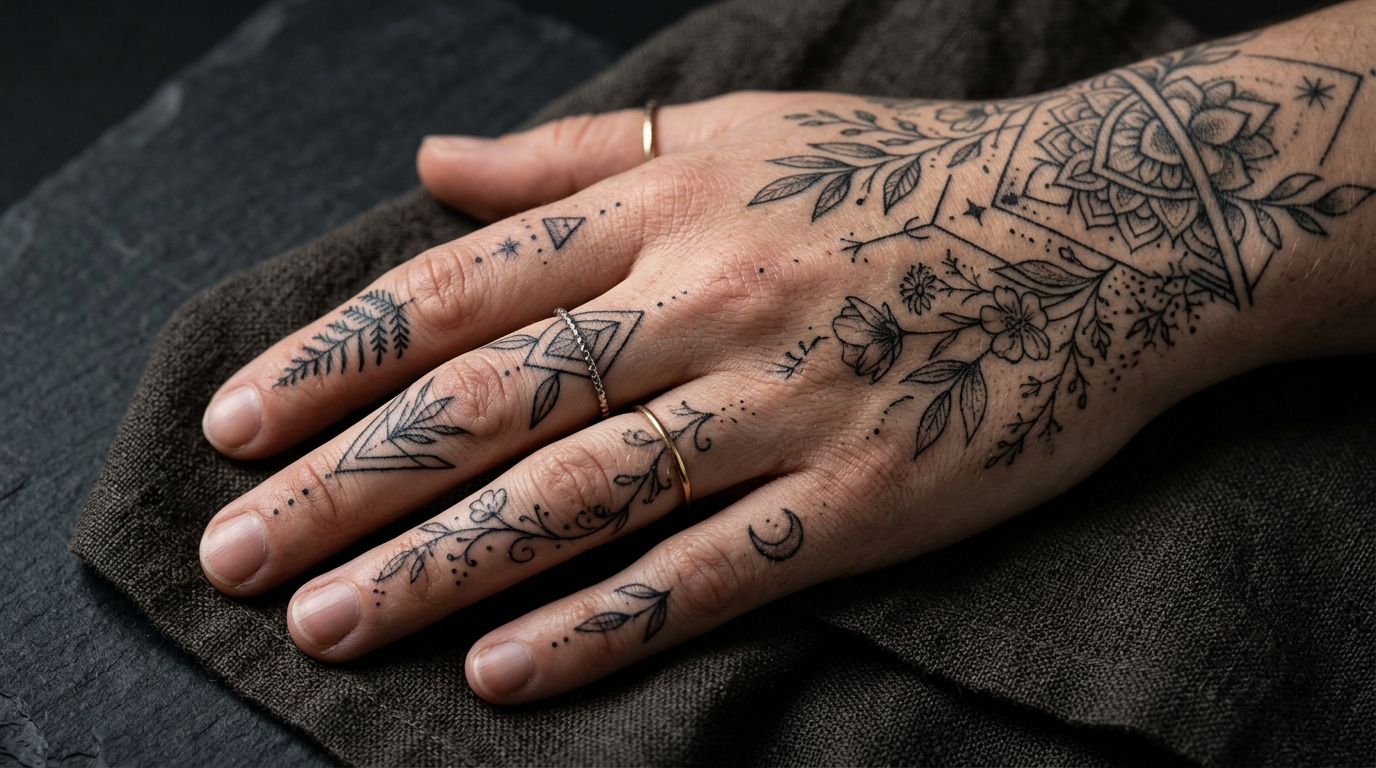
Fine-line botanical and geometric black ink tattoos on fingers, knuckles, and dorsum of the hand
Anatomical Zone: Dorsum & Digits
High-Density Meissner Receptor Field & Tendon Sheaths
Pain: 8.0 – 10.0 / 10
Select a Hand Zone to Inspect:
AgonizingAgonizing Tier

Inner Palm & Finger Pads

10.0/ 10
Physical Pain Sensation

Maximal human biological pain threshold. Deep, burning electric agony that triggers violent twitch reflexes.

Anatomical Cause

Dense bed of Meissner and Pacinian tactile corpuscles requiring forceful needle penetration.

Artist Advice & Reality

Only a few specialized artists in the world can tattoo palms so ink stays without blowing out.

Blowout Risk:Severe
Fallout Rate:60%–80% (Extreme)
Recommended Session Cap:60–90 Minutes

Why Do Hand & Finger Tattoos Hurt So Much? (The Science)

1

Cortical Representation

In human neuroanatomy (the sensory homunculus), your hands and fingertips occupy more brain processing real estate than your entire torso, legs, and arms combined. Every needle strike produces extreme brainwave stimulation.

2

Glabrous Skin & High Turnover

Palms and finger sides feature specialized stratum lucidum skin with ultra-rapid cellular turnover. Needles must penetrate deeper into dense collagen beds to deposit ink, resulting in intense burning agony.

3

Acoustic Bone Conduction

With zero adipose buffer over metacarpal and phalangeal bones, the tattoo machine's vibration reverberates directly through bone periosteum, shaking joints and radiating severe pain into wrists.


Biological Variables & Mechanics

Factors Affecting Tattoo Pain: The 6 Biological Pillars

Pain is not dictated solely by body placement. Physical preparation, needle dynamics, adrenal reserves, and neurochemistry fundamentally alter your pain threshold.

01Hardware

Anatomy & Nerve Receptor Density

The density of pain-sensing nociceptors and proximity to bare bone periosteum dictate baseline sensitivity.

  • •Nociceptor clusters: Hands, feet, groin, and neck have up to 100x more nerve endings per cm² than the outer arm.
  • •Acoustic bone resonance: When needles hit ribs, clavicle, spine, or shins, shockwaves travel directly into bare bone without fat to dampen vibration.
  • •Epidermal thickness: Skin varies from 0.5mm on wrists to 4.0mm on back and palms, changing needle friction.
Category:Biological
02Equipment

Needle Grouping & Machine Dynamics

Round liners concentrate mechanical force on a microscopic point, whereas magnum shaders disperse force across a broader surface.

  • •Round Liners: Extreme localized PSI. Feels like a searing hot knife cutting across the skin.
  • •Magnum Shaders: Feels like an intense vibrating sunburn. Tolerable initially, but repeated passes cause raw burn fatigue.
  • •Stroke length: 4.0mm+ long-stroke machines pack pigment faster but deliver higher instantaneous impact.
Category:Technical
03Neurochemical

The 3-Hour Adrenal & Endorphin Wall

Your body has a finite reserve of natural pain-blunting endorphins and dopamine that exhausts between hours 3 and 4.

  • •Minutes 0–20: Acute adrenaline surge as the nervous system evaluates the puncture trauma.
  • •Minutes 20–120: The "Endorphin Plateau" — optimal sitting window where natural analgesia buffers discomfort.
  • •Hours 3–4 (The Wall): Endorphin reserves deplete. Perceived pain triples and involuntary muscle tremors begin.
Category:Neurological
04Preparation

Blood Sugar, Hydration & Sleep

Metabolic fuel determines whether your nervous system withstands discomfort or triggers vasovagal fainting.

  • •Glycogen depletion: Getting tattooed on an empty stomach triggers rapid hypoglycemia, nausea, and fainting.
  • •Cellular hydration: Dehydrated skin is stiff, accepts ink poorly, and bleeds excessively.
  • •Sleep deficit: Sleeping under 6 hours prior to a session increases central nervous system sensitivity by up to 30%.
Category:Physiological
05Substances

Chemical & Medication Interference

Alcohol, excessive caffeine, and NSAID blood thinners alter dermal hemodynamics and nervous response.

  • •Alcohol & Aspirin: Thin the blood, causing excess bleeding that dilutes ink and prompts the artist to make more passes.
  • •High caffeine: Elevates resting heart rate and amplifies jittery nervous sensitivity.
  • •Hydration baseline: 2–3 liters of water per day for 48 hours pre-session maximizes skin plumpness.
Category:Pharmacological
06Mindset

Psychological State & Breathing Cadence

Anxiety activates the sympathetic nervous system, heightening hyperalgesia and muscle rigidity.

  • •Breath-holding: Holding breath during pain spikes starves muscle tissue of oxygen, doubling cramp intensity.
  • •Diaphragmatic breathing: Slow 4-second nasal inhales and 6-second exhales stimulate the parasympathetic vagus nerve.
  • •Mental framing: Viewing pain as a temporary biological process prevents psychological panic cascades.
Category:Cognitive

Neurological Timeline • Human Physiology

The Biological Pain Clock: What Happens Hour-by-Hour

Tattoo pain is not a static number—it is a dynamic neurochemical curve. Here is what happens inside your central nervous system during a session.

00:00 – 00:15Initial Shock

1. The Sympathetic Alarm

As needles penetrate the skin, high-threshold nociceptors fire acute impulses to the brain. Heart rate spikes, peripheral blood vessels constrict, and you may experience a momentary cold sweat.

Biological state: Acute epinephrine surge
00:15 – 01:30The Sweet Spot

2. The Endorphin Plateau

The pituitary gland releases natural beta-endorphins and dopamine, binding to mu-opioid receptors. Needle sensation transforms from a sharp sting into a rhythmic vibration. This is the easiest sitting window.

Biological state: Natural analgesia active
01:30 – 03:00Muscle Tension

3. The Local Inflammatory Cascade

Cellular histamine, prostaglandins, and bradykinin flood the dermal punctures. Skin swells, becomes hot to the touch, and posture fatigue begins setting in.

Biological state: Acute tissue inflammation
03:00 – 04:00High Danger

4. The Adrenal & Endorphin Wall

Natural endorphin reserves deplete completely. The nervous system becomes hypersensitized (hyperalgesia). Pain triples abruptly, and involuntary muscle twitching begins.

Biological state: Endorphin exhaustion
04:00 – 05:00+Severe Exhaustion

5. Neurological Fatigue & Shivers

Prolonged trauma exhausts central nervous reserves. Cold shakes, nausea, and vasovagal symptoms emerge. Experienced artists recommend stopping the session here.

Biological state: Neuro-glycogen crash

Part 07 / Needle Physics & Preparation

Round Liner vs. Magnum Shader: Two Distinct Sensations

Most first-time collectors do not anticipate that a tattoo involves two entirely distinct mechanical sensations depending on whether the artist is outlining lines or saturating shading:

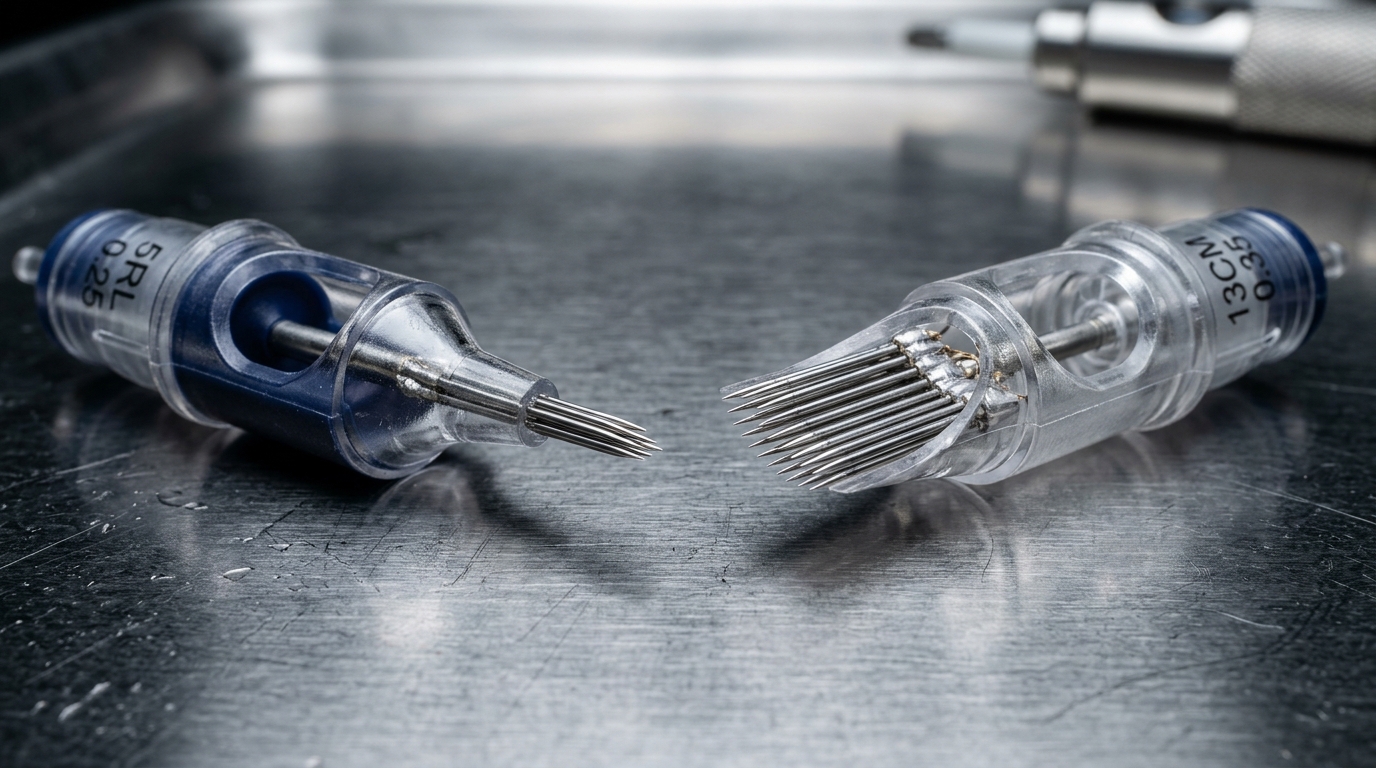
Macro photograph comparing 5RL Round Liner needle cluster on left and 13CM Curved Magnum shader needle array on right
Clinical Cartridge Anatomy: 5RL Precision Liner (Left) vs. 13CM Curved Magnum (Right)

Round Liners focus mechanical load onto a pinpoint area (sharp sting), while Curved Magnums distribute punctures across a wide perimeter (diffused vibration).

Optical Macro 10x

The Round Liner (Linework)

Sharp Sensation

A cluster of 3 to 14 tightly grouped needles. It concentrates all mechanical pressure into a microscopic point. It feels like an acute, burning scratch from an incandescent wire. Linework is intense immediately, but leaves skin relatively un-traumatized once completed.

The Magnum Shader (Color & Shading)

Friction Sensation

Two parallel rows of staggered needles (typically 7 to 25 needles wide). It disperses needle pressure across a broad swath of skin. The initial pass feels like a dull electric buzz or warm vibration. However, repeating passes over previously worked skin creates severe raw sunburn fatigue.

Client Protocol• Proven Sitting Strategy

The 5 Golden Rules of Tattoo Pain Preparation

  • ✓
    Eat a high-protein, complex carbohydrate meal 90 minutes prior. This stabilizes glycogen, prevents sudden hypoglycemia, and stops vasovagal fainting.
  • ✓
    Drink at least 2 liters of water across the 24 hours leading up to your session. Fully hydrated skin absorbs ink faster and heals with substantially less dermal trauma.
  • ✓
    Pack quick-acting glucose snacks (fruit gummies, electrolyte drink, or granola bars) to consume during artist breaks to counteract the hour-3 adrenal drop.
  • ✓
    Practice slow diaphragmatic nasal breathing. Holding your breath stimulates fight-or-flight muscle rigidity, amplifying perceived pain signals.
  • ✗
    Never drink alcohol or take blood thinners (aspirin/ibuprofen) 24 hours before your appointment. Alcohol disrupts clotting, increases capillary weeping, and washes out stencil pigments.

Interactive Planning Tool

Tattoo Session Sitting Time & Pain Readiness Estimator

Select your target placement, personal sensitivity, and planned duration to calculate your Sitting Difficulty Index and predicted Adrenal Wall hour.

Medium Piece
1 hr (Flash)3 hrs (Standard)5 hrs (Half Day)8 hrs (Full Day)
Sitting Readiness ScoreHigh Endurance Test
78 / 100
Severe Challenge (Endurance Sitting)
The "Wall" Hour
2.8 Hours

When natural endorphins exhaust

Fainting Risk
Moderate

Vasovagal syncope probability

Sitting Protocol Recommendation

Your Tailored Day-Of Strategy:
  • •Pack high-glucose gummies to counteract the hour-3 adrenal drop.
  • •Wear loose, breathable dark clothing to avoid waistband friction.
  • •Inform your artist immediately if you feel lightheaded or cold.

Clinical Advisory • Topical Anesthetic Pharmacology

The Clinical Truth About Tattoo Numbing Cream (Lidocaine 4%–5%)

Topical anesthetics offer temporary sensory blunting, but dermatologists and veteran tattoo artists caution against unguided use. Here is what happens biologically when you apply numbing cream before ink.

Hazard 01The 90-Min Cliff

The "Lidocaine Rebound" Pain Shockwave

Topical lidocaine metabolizes within 60 to 90 minutes. With numbing cream, natural adrenaline and endorphin release is delayed. When the cream wears off mid-session, all nerve pathways activate at once without hormonal buffers, causing violent shivering and panic.

Hazard 02Altered Skin Texture

Tissue Edema & Elevated Blowout Risk

Topicals cause localized vasoconstriction followed by fluid retention (edema). Skin becomes spongy and rubbery, distorting the artist's needle depth perception and increasing the risk of irreversible blurred ink blowouts.

Hazard 03Pigment Dilution

Reactive Weeping & Pigment Rejection

As the vasoconstrictor wears off, local blood vessels dilate aggressively. The resulting rush of lymphatic fluid weeps through open punctures, diluting ink concentration and pushing fresh pigment out of the dermis.

Hazard 04FDA Black Box Warning

Cardiovascular Toxicity Risks

Applying excessive lidocaine over large surface areas under plastic wrap can cause systemic absorption into the bloodstream, triggering cardiac arrhythmias, seizures, and respiratory distress.

Professional Studio Rules for Numbing Products

✓

Always consult your artist before appointment day—never show up wearing cream unannounced.

✓

Only use FDA-compliant 4% to 5% lidocaine creams; avoid unregulated black-market formulas.

✓

Never apply numbing cream to open, punctured, or abraded skin.

✓

Limit application to small areas under 6 inches to minimize systemic absorption risk.


Expert FAQ

Tattoo Pain, Gender Differences & Hand Placement FAQs

Direct clinical answers to what tattoo clients search for most.

Where is the most painful place to get a tattoo?

The ribcage, sternum, spine, armpits, and groin consistently rank as the most excruciating anatomical zones (9.5 to 10 out of 10). This is due to a biological convergence of paper-thin skin, dense sensory nerve receptor clusters, and extreme bone proximity with virtually zero adipose fat or muscle cushion.

Where is the least painful place for a first tattoo?

The outer bicep, outer shoulder, forearm, and outer thigh are the most forgiving spots for beginners (2 to 3.5 out of 10). These zones feature thicker epidermal layers and generous muscle cushions that diffuse needle vibrations.

Does tattoo pain differ between females and males?

Yes, primarily due to subcutaneous fat distribution, skin thickness, and hormonal cycles. Biological females often experience less vibration on the thighs, glutes, and hips due to protective adipose padding, but experience higher sensitivity along the ribs, underbust, and during the pre-menstrual luteal phase. Males have slightly thicker skin on extremities, but lean torsos make the chest and sternum feel excruciating due to tight skin over bare bone.

What phase of the menstrual cycle is best for getting a tattoo?

The Follicular Phase (Days 6–13) and Ovulation (around Day 14) represent the optimal window for women. During this timeframe, circulating estrogen is elevated, naturally boosting brain endorphins and blunting pain receptors. Conversely, the pre-menstrual and menstrual phases (Days 26–5) cause estrogen to plummet, which can increase pain sensitivity by 20% to 30% and heighten skin bruising.

How painful is a hand or finger tattoo?

Hand tattoos rank between 8.0 and 10 out of 10. The hand has the highest density of tactile sensory receptors (Meissner corpuscles) in the human body, combined with zero subcutaneous fat over the metacarpal bones and extensor tendons. Furthermore, the inner palm and finger pads are ranked at 10/10—the single most painful zone in all of tattooing.

Why do hand and finger tattoos fade and blowout so easily?

Hands are exposed to frequent washing, friction, and UV radiation, which causes the stratum corneum to shed up to twice as fast as the torso. Additionally, the skin on the sides of the fingers is extremely thin and flexible, making it easy for ink to blow out into lateral subcutaneous tissue or fade out within 3 to 6 months.

Is it safe to use numbing cream (Lidocaine) for a tattoo?

While OTC 4%–5% lidocaine creams temporarily numb sensation for 60 to 90 minutes, they carry notable risks: the "rebound effect" where pain hits abruptly when the cream wears off mid-session, tissue edema (spongy skin) that alters needle depth and risks permanent blowouts, and reactive weeping that washes out stencils. Never apply numbing cream without consulting your artist in advance.

Why do tattoos hurt significantly more after 3 or 4 hours?

During the first 2 hours of a session, your pituitary gland releases a surge of natural endorphins and dopamine to suppress peripheral pain signals. By hour 3 to 4, this neurochemical reserve is completely exhausted, while localized histamines and tissue inflammation spike. At this point, pain perception triples, and clients commonly experience chills or muscle twitches.

How many hours can an average person sit for a tattoo?

Most clients can comfortably endure 2 to 3.5 hours on moderate anatomical zones. Beyond 4 hours, endorphin depletion makes sitting extremely grueling. For large pieces (sleeves, backpieces), veteran artists strongly advise capping sittings at 3 to 4 hours and scheduling multiple sessions spaced 3 to 4 weeks apart.

Can I take pain medication or ibuprofen before getting tattooed?

Never take aspirin, ibuprofen, or NSAIDs within 24 hours of your appointment. These medications thin the blood, causing excessive bleeding that dilutes ink saturation and wipes away the artist's stencil. Acetaminophen (Tylenol) does not thin blood, but always check with your artist first.

Connected Reference Suite
View all 8 interactive tools